Near Mint to Damaged: how card condition works
Two copies of the same raw card can be worth very different amounts, and condition is usually the reason. Here is what Near Mint, Lightly Played, Moderately Played, Heavily Played and Damaged actually mean, how to check your own cards, and how we group them when we make an offer.
Where these words come from
These are the condition names TCGplayer uses, and it publishes a written standard for each one (TCGplayer). Its March 2025 version even scores flaws with points: a slight flaw is 1 point, minor 2, moderate 4 and major 8. Near Mint allows up to 3 points, Lightly Played 6, Moderately Played 12 and Heavily Played 24. Anything beyond that is Damaged (TCGplayer Card Conditioning Standards).
You do not need to count points to sort your own cards. The descriptions below are enough.
Check the back first
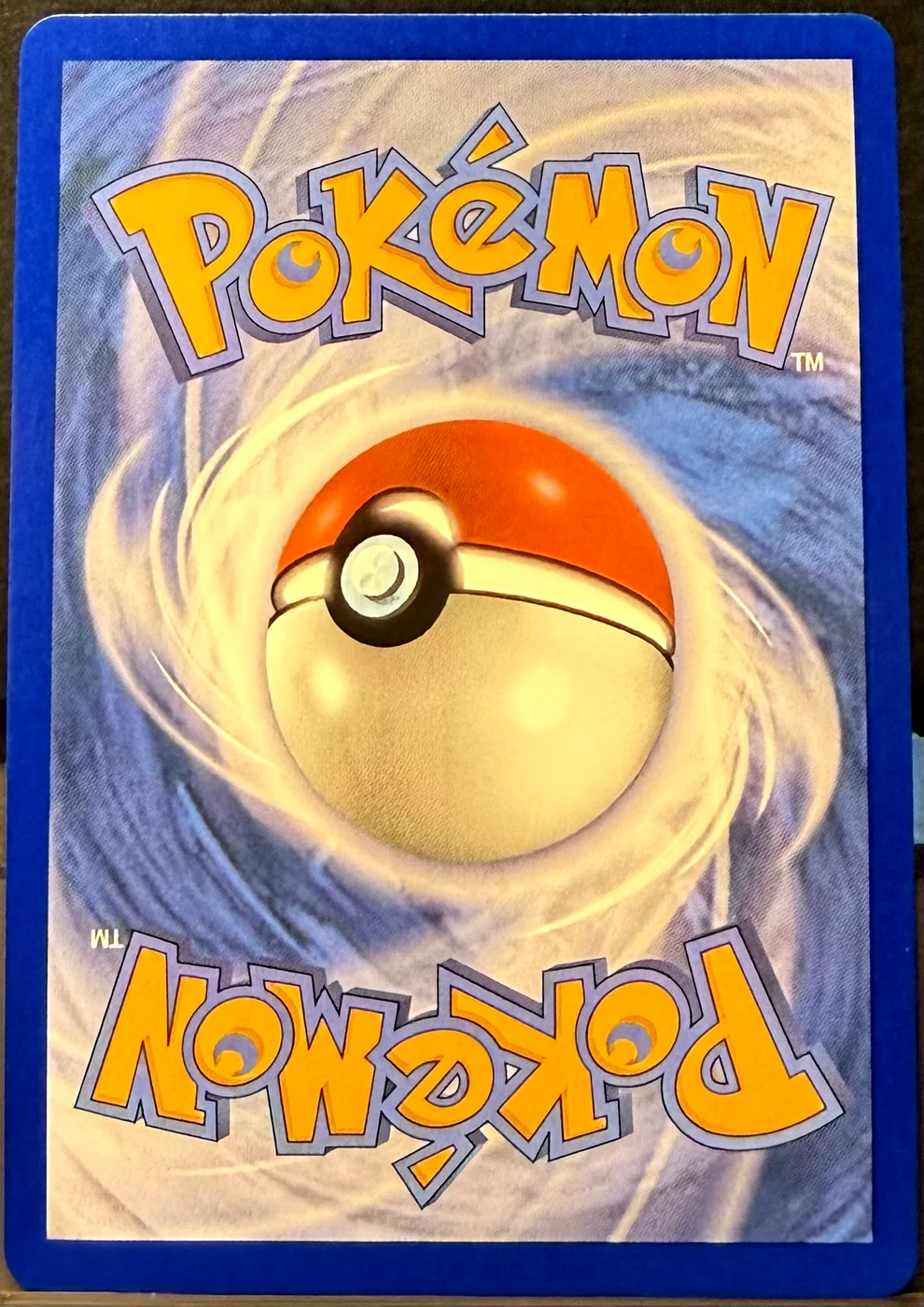
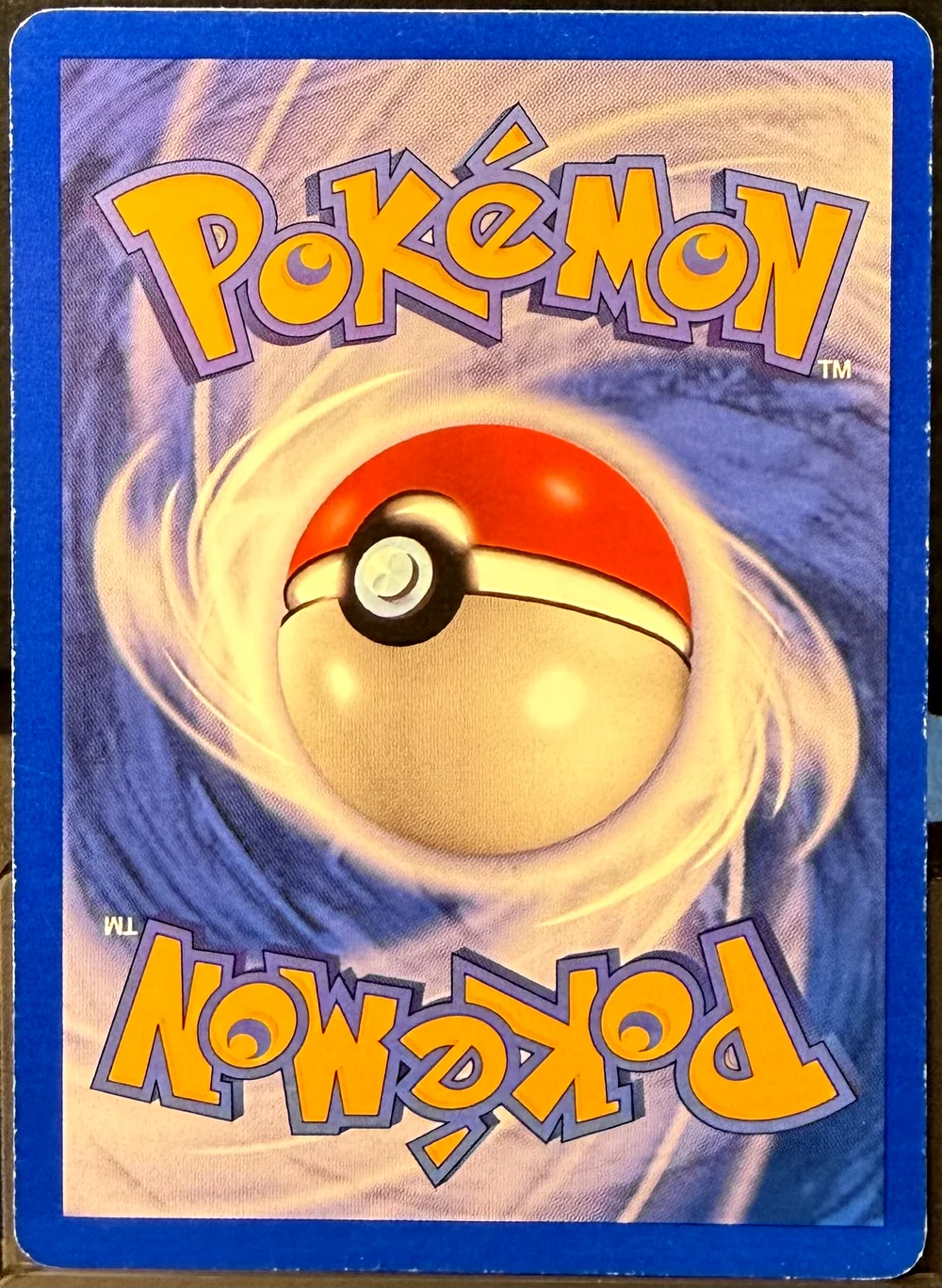
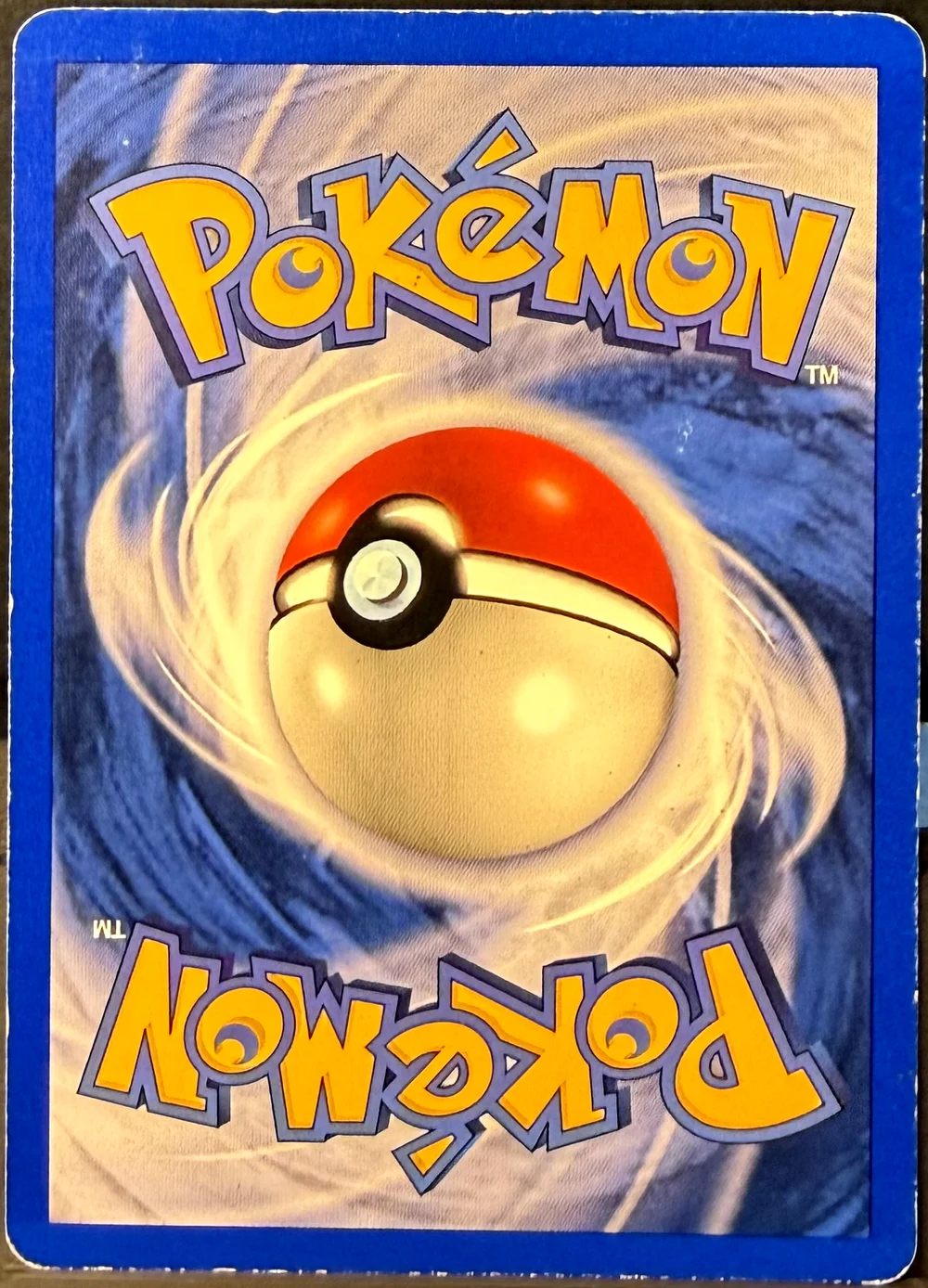
Turn the card over before you look at the front. The dark blue border on the back of an English Pokémon card shows wear more clearly than almost anything on the front. Every chip, scuff and rough corner shows up as a white spot against the blue. If the back is clean, the card is usually in good shape. If the back is covered in white, the front will not save it.
TCGplayer counts scuffing across the total surface of both the front and the back, so back wear counts just as much as front wear (TCGplayer Card Conditioning Standards).
Near Mint
A Near Mint card looks close to unplayed. TCGplayer describes it as showing "minimal wear from shuffling, play, or handling", with crisp corners and clean edges apart from a few slight flaws, such as a little edge wear or a couple of minor scratches (TCGplayer). No bends, no grime and no surface wear are allowed (TCGplayer Card Conditioning Standards).
On the back: at most a few tiny white specks along the edges, and nothing you notice at arm's length.
Lightly Played
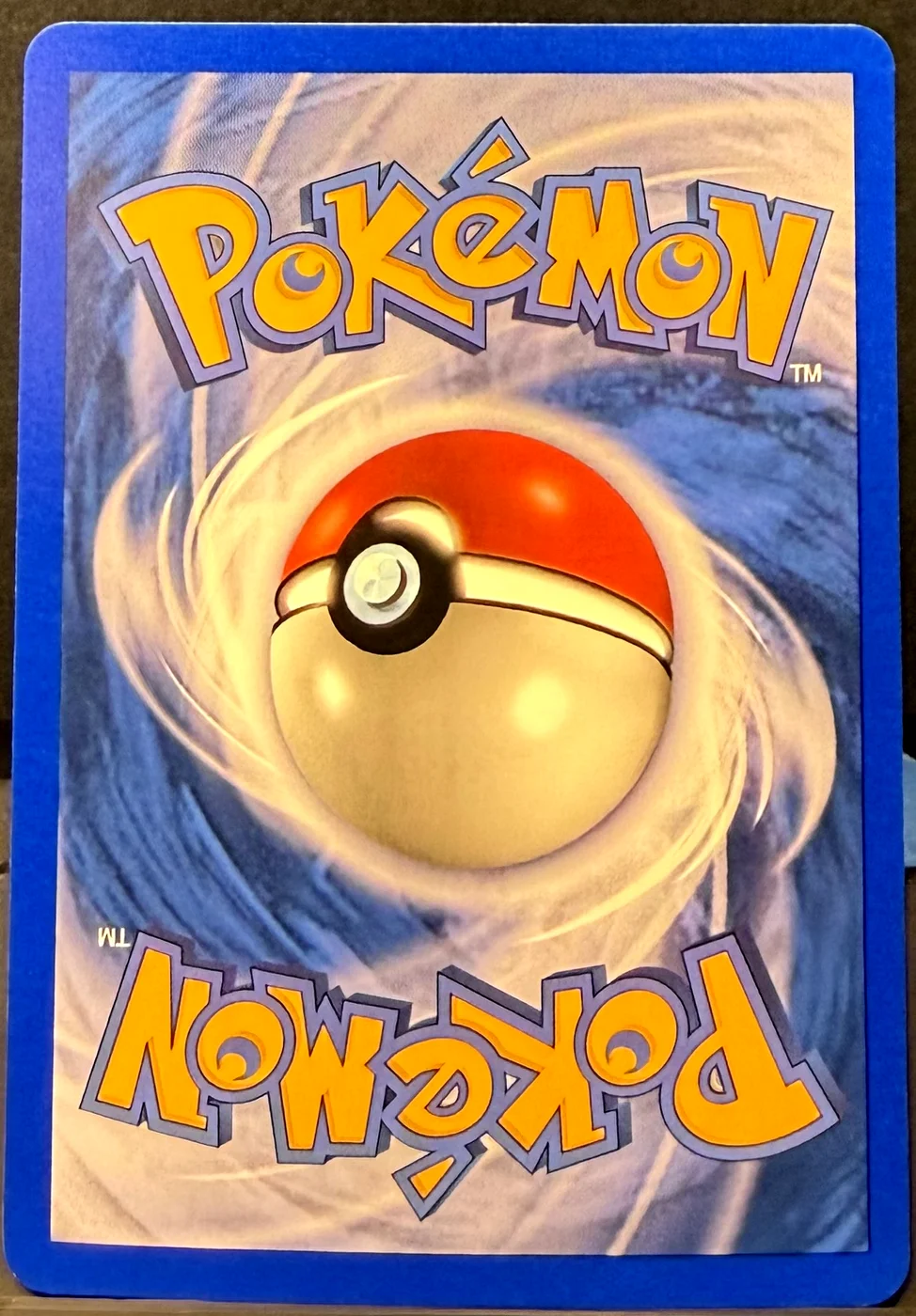
A Lightly Played card has been handled, but nothing about it is serious. It can have minor edge wear, scuffs or scratches, and none of them should be too severe or too many (TCGplayer). No dents or creases are allowed. These affect the card's structure and lower its value.
On the back: white along parts of the edges and a corner or two, visible when you look for it.
Moderately Played and Heavily Played
These are two separate grades on TCGplayer, but we treat them as one group when we buy. The line between them is fine, and both are clearly played cards.
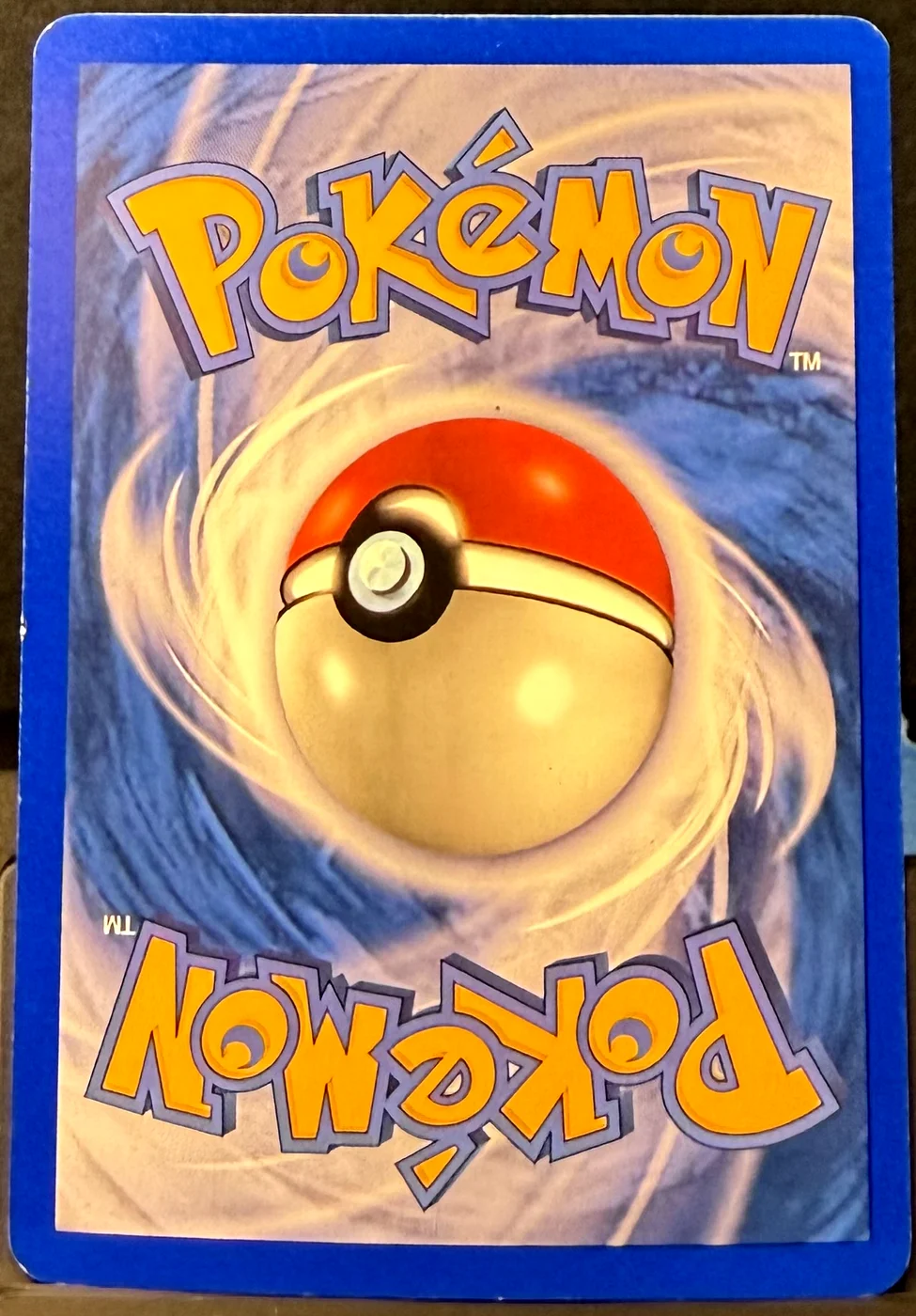
Moderately Played cards can show real wear: edge wear, surface wear, scratching or scuffing. Additionally, clean-back cards that have very minor bends or super light creases, that you can barely see, can fall into this category.
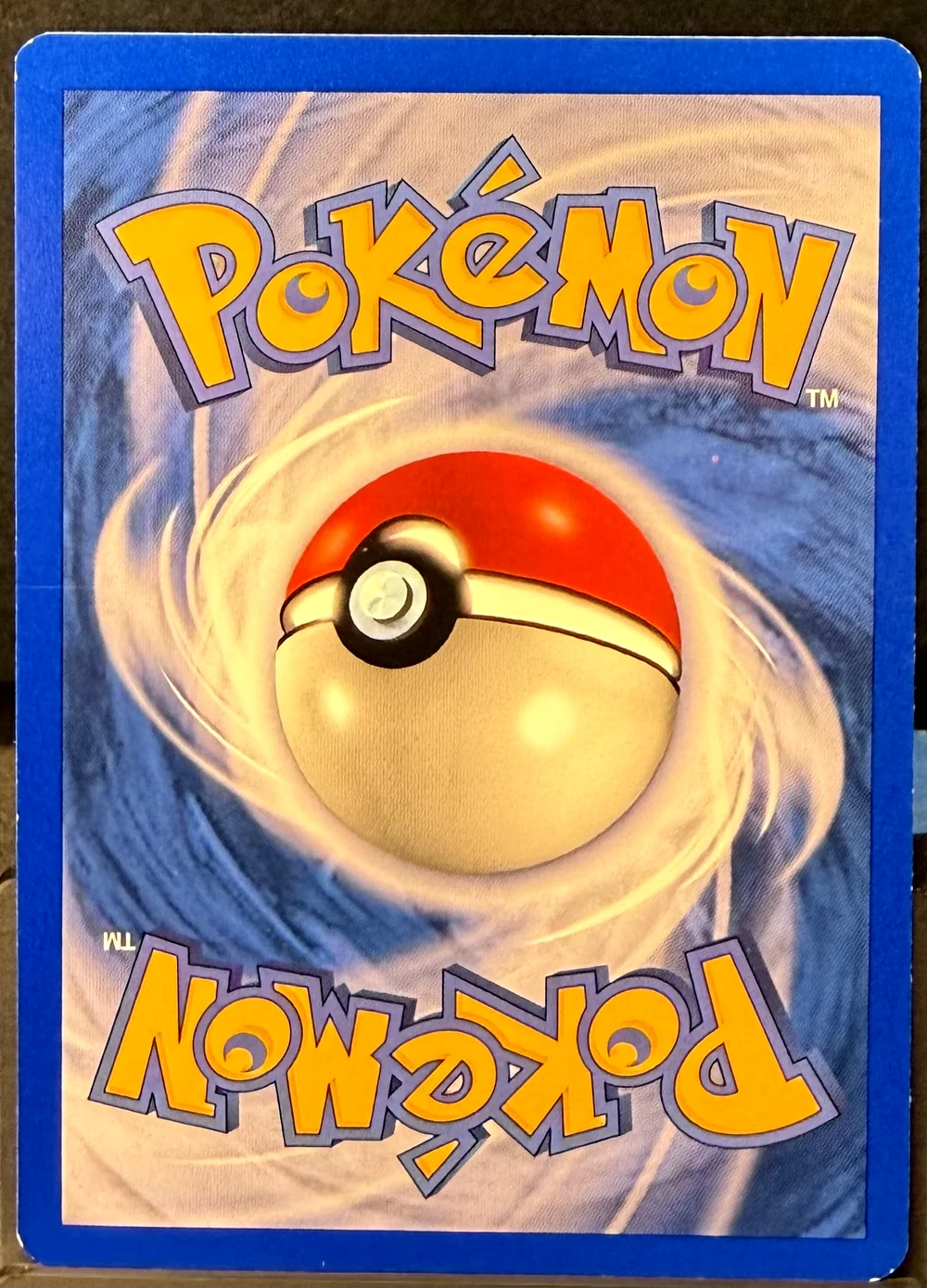
Heavily Played cards show "a major amount of wear" (TCGplayer), including more defined or deeper bends and creasing. They may have significant whitening too. However, they must still be possible to authenticate and cannot be structurally damaged.
On the back: white wear running along most of the edges, rounded or soft corners, and often scuffing or a crease you can see straight away.
Damaged
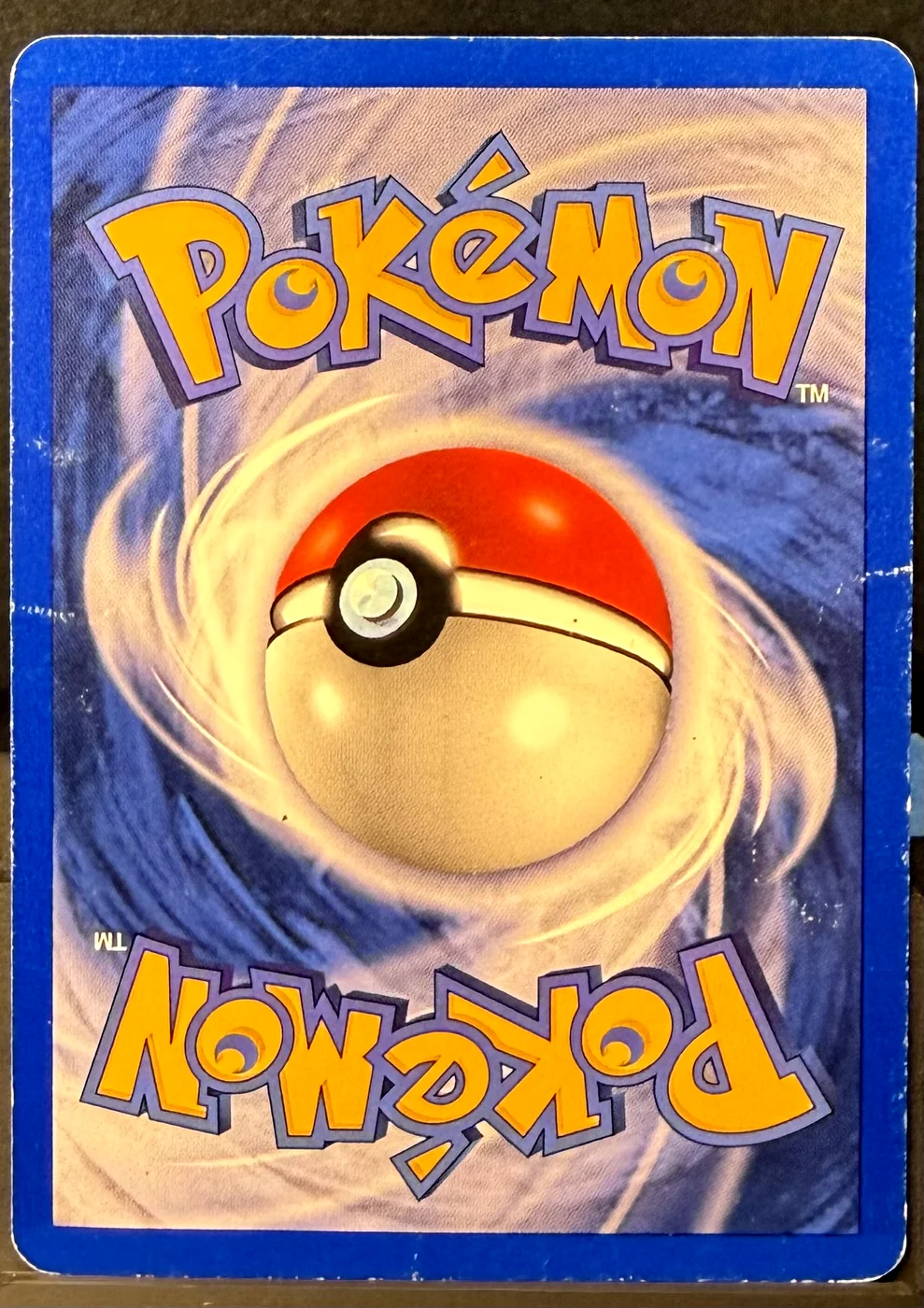
A card is Damaged once the wear goes past Heavily Played, with multiple creases or dents and/or significant whitening. Typically you'll see pinholes, splitting of the edges, folding of the card, liquid exposure, food or other substances, writing or ink that did not come from the factory, and missing or unreadable card information. Signatures, stamps, paint and marker also count as Damaged where applicable (TCGplayer).
On the back: a fold line, water rippling, heavy creasing, or marks that were not there when it was printed would be considered damage.
How we sort cards when we buy
When you send us raw cards, we put each one into one of four groups:
- Near Mint
- Lightly Played
- Played — Moderately Played and Heavily Played together
- Damaged
We buy cards in all four groups, Damaged included.
Then we price it from recent sales of that card in that condition, and we show you the sales we used. If you are not sure which group a card falls in, send a clear photo of the front and the back and we will tell you.
Sources
Have one to sell?
Send photos and we will come back with an offer and the exact sold listings we based it on. No fees, and we send you a prepaid UPS label.
Get an offer